
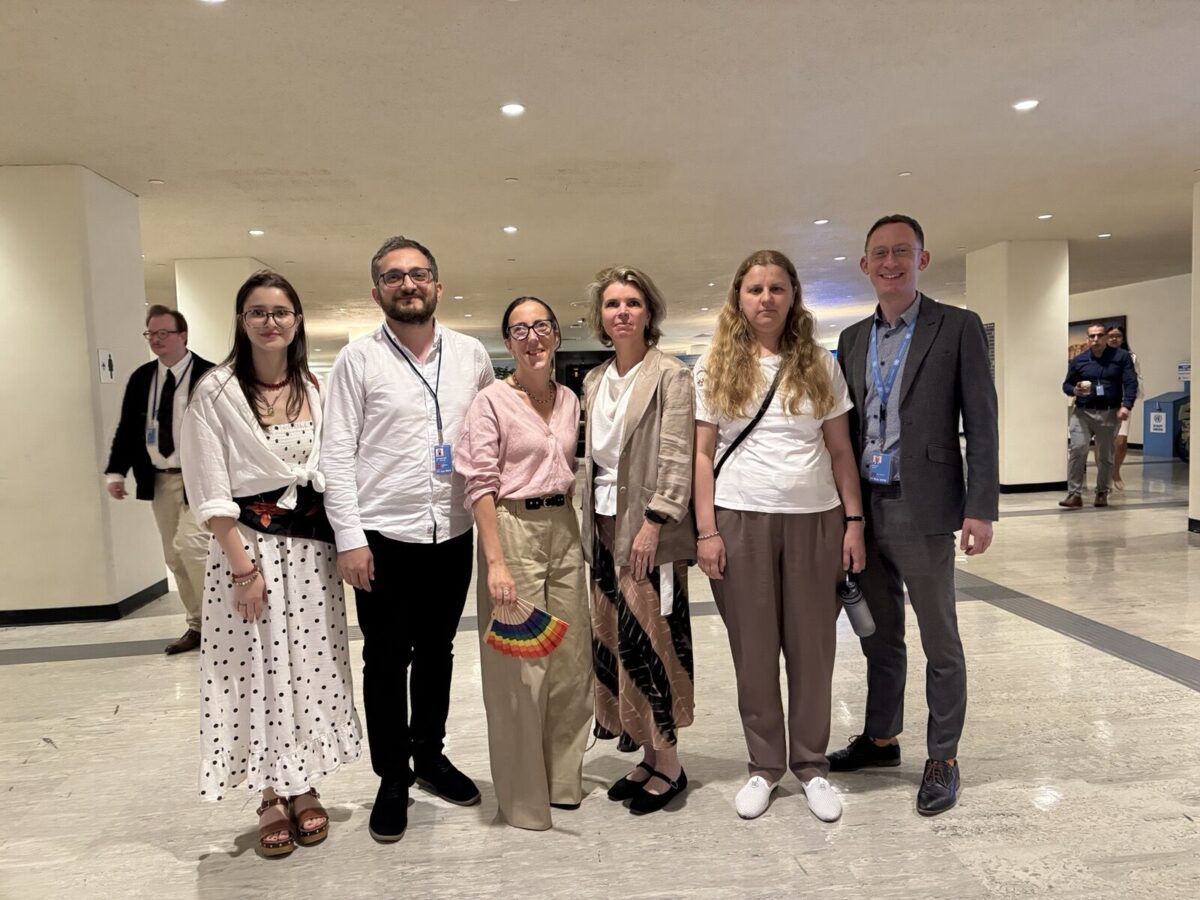
At the 19th Session of the Conference of States Parties (COSP19) to the UN Convention on the Rights of Persons with Disabilities (CRPD), held at United Nations Headquarters in New York, Validity Foundation brought its unique strategic litigation expertise to a series of high-level discussions on disability rights, international justice, and deinstitutionalisation.
As one of the few organisations in the world dedicated to regional and international strategic litigation advancing the rights of persons with intellectual disabilities and persons with psychosocial disabilities, Validity works to transform legal standards into practical change through landmark cases, advocacy, and accountability mechanisms.
Steven Allen, Executive Director of the Validity Foundation, participated in a number of COSP19 events that highlighted how strategic litigation can challenge segregation, institutionalisation, guardianship, discrimination, and barriers to justice across different regions of the world.
At the side event entitled “CRPD at 20: Its Evolving Impact on Other International Human Rights Instruments”, Steven reflected on how the CRPD has reshaped international and regional human rights law over the past two decades. Drawing on Validity’s litigation experience across Europe and Africa, he highlighted the growing influence of disability rights jurisprudence in areas including legal capacity, independent living, access to justice, and community inclusion. He emphasised that many of these advances have been driven by persons with disabilities themselves, alongside strategic litigation that has challenged, for example, segregation, institutionalisation, guardianship, and forced interventions.
Steven also addressed the side event “War Crimes Against Persons with Disabilities in Ukraine – Rethinking International Humanitarian Law”, where he examined the barriers persons with disabilities face in accessing justice, reparations and accountability for atrocities committed during Russia’s full-scale invasion of Ukraine. He argued that victims must receive reparations, and reparations for persons with disabilities must go beyond financial compensation, and must include rehabilitation, accessible housing, community-based support, restoration of legal capacity, replacement of assistive devices, psychosocial support, guarantees of non-repetition, and structural reform.
At a further COSP19 discussion on a future disability-inclusive Crimes Against Humanity Treaty, Steven drew directly on Validity’s litigation work, including cases such as T.J. v Hungary and I.C. v Moldova, to demonstrate how justice systems frequently fail persons with disabilities when discrimination, institutionalisation and violence are not recognised as systemic human rights violations. He called for explicit recognition of disability within international accountability frameworks, including the to be adopted Crimes Against Humanity Treaty, and for procedural accommodations to be embedded throughout justice processes.
Validity co-hosted the side event “Contextualizing Deinstitutionalization in the Asia-Pacific: From Reflective Assessment to Rights-Based Pathways and Regional Accountability” together with the Korean Disability Forum, the CRPD Committee, the ASEAN Disability Forum, the Global Coalition on Deinstitutionalization and other partners. Opening the event, Steven highlighted that deinstitutionalisation is not simply about closing institutions, but about advancing freedom, autonomy, dignity and equal citizenship. He stressed the importance of survivor leadership, regional cooperation and accountability in ensuring that community inclusion becomes a reality throughout the Asia-Pacific region.
Across all discussions, a common theme emerged: strategic litigation remains one of the most powerful tools for exposing systemic discrimination, advancing legal reform, and ensuring that persons with disabilities are recognised as rights holders rather than objects of care.
Twenty years after the adoption of the CRPD, Validity remains committed to using litigation, advocacy and international engagement to ensure that the Convention’s promises are realised in practice. From challenging institutionalisation in Europe, to advancing disability rights in Africa, to shaping international justice and accountability mechanisms, our work continues to focus on one objective: securing dignity, autonomy, equality and inclusion for all persons with disabilities.