
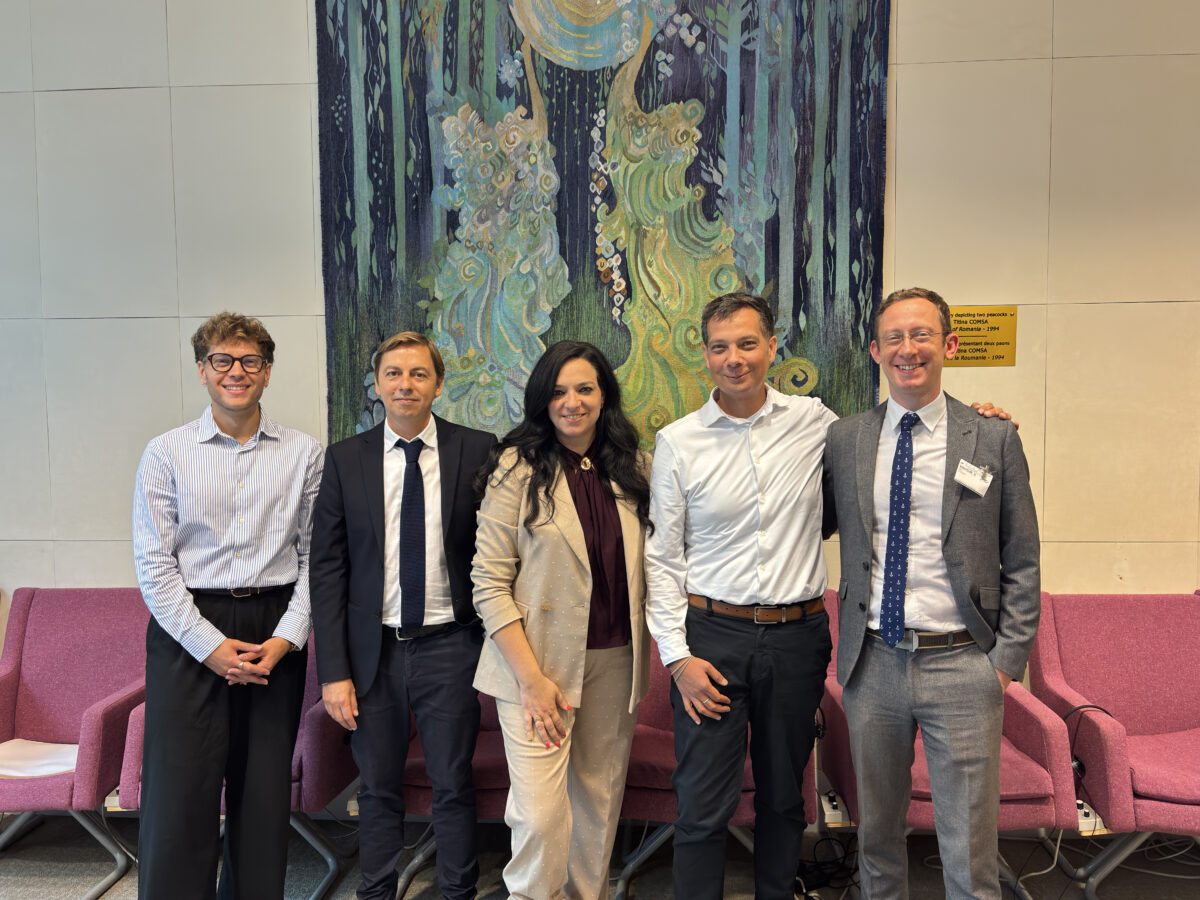
On 7 September 2026, Validity Foundation Executive Director Steven Allen briefed representatives of the Council of Europe’s Committee of Ministers in Strasbourg on Hungary’s implementation of the landmark European Court of Human Rights judgment in Validity Foundation on behalf of T.J. v. Hungary.
The briefing was organised by the European Implementation Network (EIN), which supports civil society engagement in the process by which the Committee of Ministers supervises implementation of judgments of the European Court of Human Rights. It followed Validity’s latest submission to the Committee in July 2026, setting out continuing concerns about the lack of progress in addressing the structural human rights violations exposed by T.J.’s case.
T.J. was a woman with an intellectual disability who spent 35 years institutionalised at Topház, a large residential institution in Hungary. During monitoring visits in 2017, Validity found her severely malnourished and non-responsive, with visible injuries and tied to her bed. She died the following year, aged 45.
In its October 2024 judgment, the European Court found that Hungary had violated T.J.’s right to life. It concluded both that the State had failed to provide the protection necessary to prevent the deterioration of her health and premature death, and that the subsequent investigation had been inadequate. Rather than examining the conditions and systemic failures that contributed to her death, the authorities had focused narrowly on its immediate medical cause.
The significance of the judgment extends far beyond T.J.’s individual case. It highlights the interconnected consequences of institutionalisation, guardianship, ineffective oversight and the absence of independent representation – all of which continue to leave persons with disabilities isolated from the outside world and without effective means to challenge abuse, neglect or violations of their rights. In 2020, the United Nations Committee on the Rights of Persons with Disabilities found that Hungary’s system of mass institutionalisation and guardianship of person with disabilities amounted to grave and systematic violations of international law. The T.J. judgment vividly documents the consequences of these abusive, unreformed systems.
In September 2025, the Committee of Ministers also recognised that the judgment raised multiple structural issues requiring wide-ranging measures to prevent similar violations in the future. Validity’s briefing examined the progress made since then and identified four areas where fundamental reform remains necessary: deinstitutionalisation, independent monitoring, guardianship and access to justice, and effective investigation of deaths in social care settings.
Steven Allen, Executive Director of Validity Foundation, said:
“T.J.’s death cannot be separated from the system around her: decades of institutionalisation, guardianship and a lack of independent scrutiny. The execution of this judgment is an opportunity for the Council of Europe to insist on structural reform in Hungary – towards independent living, effective monitoring and real access to justice. It also matters beyond this case: disability rights must be treated as a core accountability issue within the Council of Europe’s human rights protection system.”
Validity told representatives of the Committee of Ministers that little substantive progress has yet been made in addressing these structural problems.
Hungary continues to rely heavily on institutional forms of social care for persons with disabilities. Although government policy refers increasingly to “supported housing”, congregate settings accommodating large numbers of people – including facilities created on or close to the sites of former large institutions – do not amount to genuine community-based independent living. Real deinstitutionalisation requires accessible housing, individualised support and mainstream public services that enable persons with disabilities to choose where, how and with whom they live.
Independent scrutiny also remains weak. Civil society organisations continue to be prevented from independently monitoring social care institutions, while existing national monitoring mechanisms have limited capacity to inspect the very large number of settings in which people may be deprived of their liberty. The experience of Topház demonstrates why independent access is essential: serious violations can remain hidden when institutions are closed to external scrutiny.
Validity also highlighted the continuing barriers created by Hungary’s guardianship system. In T.J.’s case, her state-appointed guardian failed to take action to protect her interests or pursue accountability after her death. Ensuring that persons with disabilities can obtain independent legal representation and exercise their legal capacity is therefore central not only to autonomy, but also to access to justice and effective remedies.
Finally, Validity called for fundamental improvements in the investigation of deaths in social care settings. Investigations must go beyond determining an immediate medical cause of death and examine how institutionalisation itself gives rise to systematic neglect and practices including widespread use of physical, chemical and mechanical restraints. Institutionalisation itself is a violation of the rights of persons with disabilities and must be considered when considering the circumstances of deaths in such settings. Validity has called for transparent public data on deaths in social care and the investigations undertaken in response over the last decade.
Validity urged the Committee of Ministers to maintain close supervision of the judgment and to ensure that implementation remains focused on preventing similar violations. This includes reopening an effective investigation into T.J.’s death, and those of at least nine other individuals who died in the institution after Validity publicly disclosed the shocking situation at the institution. Validity also called for strengthening independent monitoring with meaningful civil society participation, abolishing guardianship and guaranteeing access to independent representation, and pursuing genuine deinstitutionalisation in accordance with the UN Convention on the Rights of Persons with Disabilities. The Council of Europe can have the greatest impact by coordinating closely with the United Nations when making structural recommendations to Hungary, and particularly following the CRPD Committee’s inquiry report.
The briefing forms part of Validity’s wider work to ensure that successful human rights litigation leads to lasting structural change. Across Europe, Validity works to challenge institutionalisation, advance the right of persons with disabilities to live independently in the community, strengthen access to justice and secure accountability for serious human rights violations.
Engagement with the Committee of Ministers is an important part of that work. Judgments of the European Court can only transform lives when the underlying violations are effectively remedied. Validity will continue working with persons with disabilities, civil society partners and European institutions to ensure that disability rights are fully integrated into the Council of Europe’s system for protecting and enforcing human rights.