
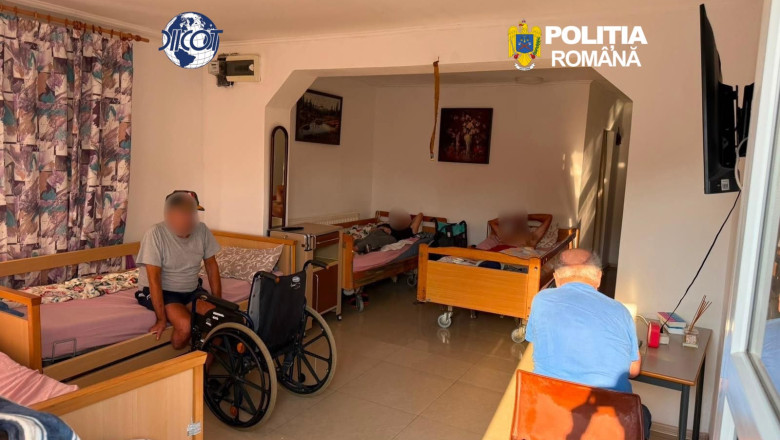
Validity is deeply concerned by reports from Romania that more than 3,000 persons with disabilities may have been transferred over a period of two decades from public authorities into the custody of a private individual operating unlawful and unregistered institutions.
According to media reports and information now emerging in criminal proceedings, the private operator was allegedly contacted by hospitals, police and social services to “take over” persons with disabilities. Many of those placed in his custody have reportedly died, yet no effective investigation appears to have been carried out into the circumstances of their deaths.
The scale and duration of these reported practices raise serious concerns of trafficking, forced labour, arbitrary deprivation of liberty, torture, inhuman and degrading treatment, and systemic discrimination against persons with disabilities.
In a televised interview, the private operator openly acknowledged the substandard conditions in which people were being held, while also appearing to justify the denial of decent living conditions to persons with disabilities:
“To be authorised, first of all, I would have to drastically reduce the number of patients, because I have 4-5 patients in the room. I should only have two […] With some of the patients who end up at Dumbrava, some, let’s not generalize, are people who have done nothing all their lives. […] Give them luxurious conditions, better than for all people? And I ask. Why? It’s not normal! I can’t! But even if I could, I wouldn’t do it!”
Steven Allen, Executive Director of the Validity Foundation, said:
“As the horrific facts continue to emerge, our thoughts are with the countless persons with disabilities who appear to have been transferred into situations amounting to trafficking, exploitation and modern slavery, including through the involvement of public authorities.
Romania must provide full transparency beyond the criminal investigations now taking place. All surviving victims must receive reparations, redress and support to rebuild their lives in the community. They must not simply be moved from one abusive environment to another.
As a matter of international human rights law, Romania must carry out full, thorough and transparent investigations, ensure accountability for all those responsible, and provide concrete guarantees of non-repetition. Every effort must be made to support victims to overcome the horror they have experienced and to live freely, safely and independently in the community.”
Validity is concerned that the trafficking and exploitation of persons with disabilities remains poorly understood, particularly in countries with weak oversight mechanisms, segregated care systems, and insufficient commitment to deinstitutionalisation.
In 2025, Validity achieved a landmark ruling against the Republic of Moldova on behalf of a woman with disabilities who had been trafficked under the guise of deinstitutionalisation. The European Court of Human Rights found that the Moldovan authorities had “given” the woman to a private family after she had spent most of her life in an institution. What was treated as a supposed “favour” became years of rape, forced labour and exploitation. When she complained, national authorities failed to investigate effectively, dismissing her testimony as a woman with a disability.
The emerging allegations in Romania show again how persons with disabilities can be rendered invisible, transferred between institutions, private actors and so-called charitable arrangements without meaningful scrutiny, legal protection or access to justice.
Validity is also concerned that persons with disabilities who died in these settings over the past 20 years remain largely invisible in the public discourse. Their deaths must be independently investigated. Their lives must be counted. Their families and communities are entitled to truth, justice and accountability.
Romania ratified the UN Convention on the Rights of Persons with Disabilities in 2011. Under the Convention, persons with disabilities have the right to equality before the law, non-discrimination, liberty and security, freedom from exploitation, violence and abuse, and the support they require to live independently in the community. Public discourse that justifies trafficking, exploitation or segregation in the name of “charity” is reprehensible.
Romanian authorities must ensure an effective, independent and human rights-based investigation into all allegations of trafficking, exploitation, unlawful detention, abuse and deaths in custody. They must also guarantee independent monitoring of all residential settings where persons with disabilities are placed, and take urgent steps to end segregation and support people to live in the community.
Validity stands in solidarity with Romanian human rights activist Georgiana Pascu, who has reported on this situation and is now facing online backlash for her work. Hate speech and intimidation have no place in a democratic society. Whistleblowers, journalists, activists and human rights defenders must be protected when they expose abuse.
Image from the searches of illegal asylums in Bihor. Source: DIICOT